
In the legendary history of early Rome, it was the second king, Numa, who formed the first collegia of trades. These guilds had their own courts, councils and temples, and were responsible for maintaining professional standards, providing aid for deceased members’ burials and widows, and for organizing religious ceremonies to honour the gods. The members of the trade guilds were united by a common occupation and by family connections created by advantageous marriages within the association. Apprenticeships were established and regulated by the guild. Fathers did not typically take on their own son as an apprentice, but rather established exogamous connections within the collegia by having them trained by others. Training was long and thorough, and the apprentice was adopted into the family of his master for a period up to six years, usually starting at puberty.
Guild charters were drafted and sworn to by members, who agreed to pay regular dues, attend meetings, and abide by professional standards of behavior. These included rules against slander or harm to fellow guild members, and fines were laid upon those who acted improperly. Guild membership was restricted to free Romans, or to ‘freedmen’ (former slaves). Slaves were not admitted, although they were employed by guild members. Guild membership carried with it certain social status and was considered a sign of honour, trustworthiness, and responsibility.
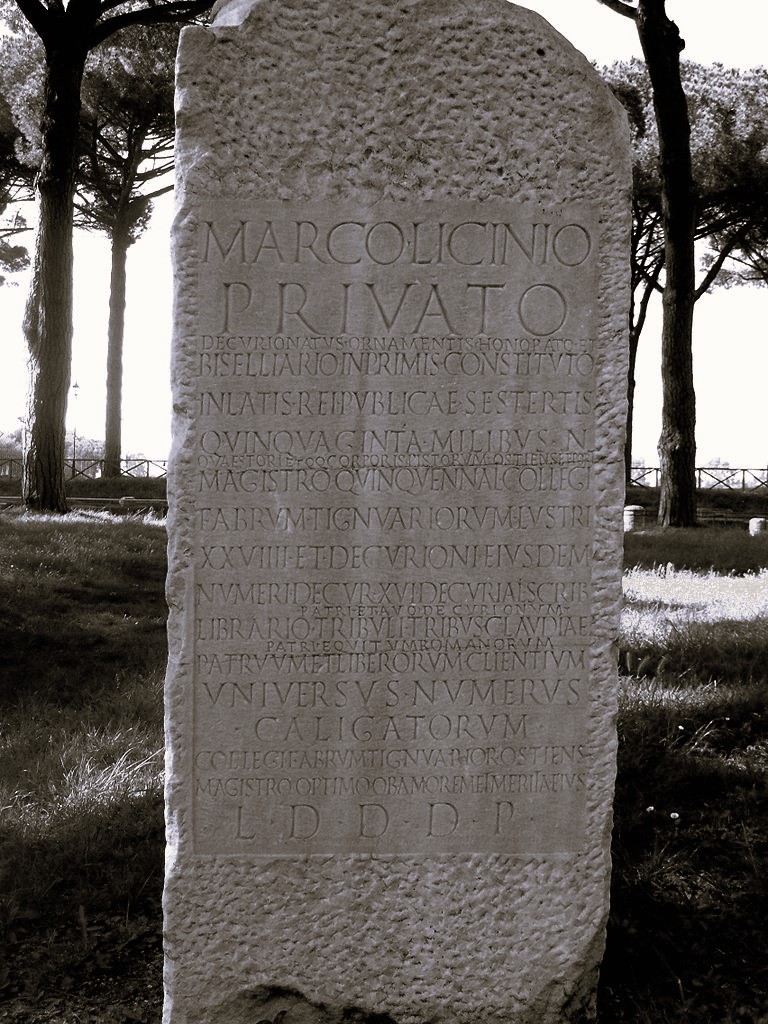
In the Roman republic (509 BCE to 27 CE), craftsmen marched annually in the spring festival dedicated to earth goddess, the Magna Mater. They paraded according to occupational guilds, or collegia. Builders in general were known as faber, and woodworkers were faber lignarius, after ligna, Latin for wood. Other related trades were those of the faber tignarius, or framing carpenters (tigna meaning wooden beam), and the faber carpentarius, who built a type of two-wheeled cart and from whom we have somehow inherited the word ‘carpenter’ to describe anyone who is a professional builder, primarily in wood. According to Livy, the fabri were always the first guild to be called up for the Roman army. In later years, the Collegia Lignarii was replaced by the title Dedrophorii (“timbermen”) and assumed the nature of a religious brotherhood like that of modern-day Freemasons. These men were concerned with the cult of Cybele and Attis and held festival in their honour. The myth involves a jealous earth goddess who murders her own mortal grandson. His spirit, however, lives on, as a tree-god, reminiscent of the Egyptian story of Osiris. Accordingly, each year the dendrophrii would sacrifice to these gods, and decorate a pine tree with flowers.
 Mysteries of the Carpenter