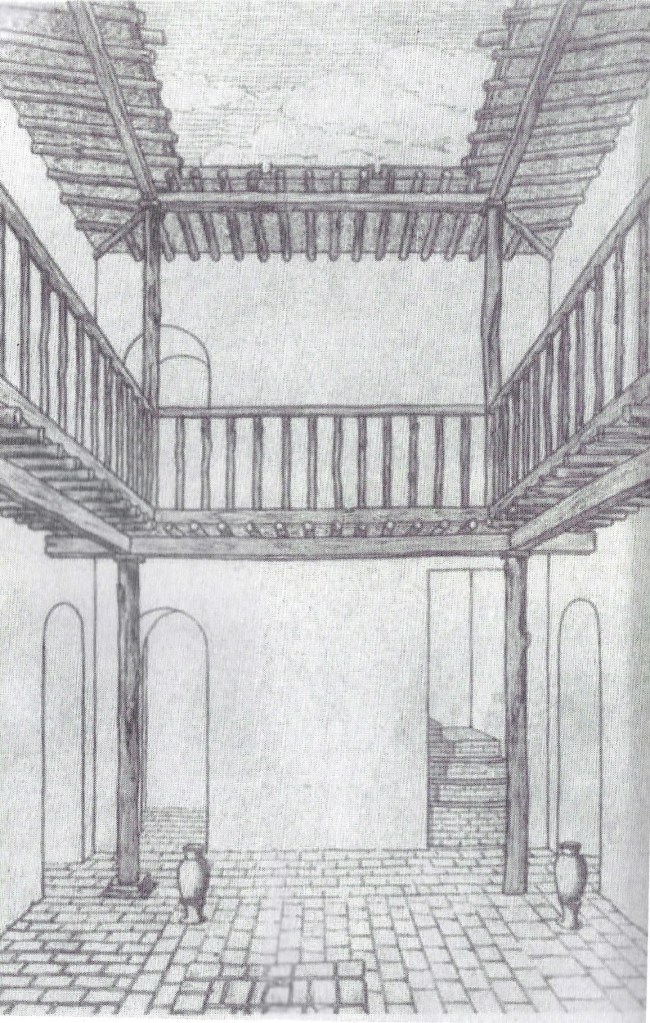
The archaeological evidence for wood use in Mesopotamia is restricted by disappearance, over thousands of years, of the physical remains of that timber. Structural members are sometimes identified by ‘ghosts’, such as holes made in brick walls and floors where once were held wooden beams or posts. Wooden structures are also deduced by simple ‘structural logic’ indicating where they would have fleshed-out the brick skeletons. It is ironic that fire has served as a preservative of minute amounts of organic material that modern scientists are just becoming able to date and identify. Most of our knowledge of ancient woodworking is inferred from texts and illustrations. The problem with these archaic sources is that they were created by scribes and artists, not woodworkers, and thus tend to herald the larger achievements of state and temple rather than those in the domestic sphere.

In 1922, Sir Leonard Woolley began excavation of what became known as the Royal Tombs at Ur, midway between the Persian Gulf and modern-day Baghdad. Woolley identified many aspects of public and domestic architecture. Dating from approximately 2100 BC, the excavations revealed a city of extensive palaces, once-towering ziggurats, and sophisticated domestic buildings that incorporated multiple rooms, courtyards, gardens, and baths. Wood use at Ur was identified in roof-beams, floors, stairs, galleries, doors, furniture, and frames for reed or lattice panels used as room dividers. Further archaeology, at places such as Fara, Kish, and Susa, has added to this list of wooden objects: thresholds, jambs, lintels, ladders, and planking. Wood was employed in the making of levers, locks, chairs, tables, beds, boxes, cages, corrals, coffins, plough-parts, and the handles of weapons and tools.

 Mysteries of the Carpenter