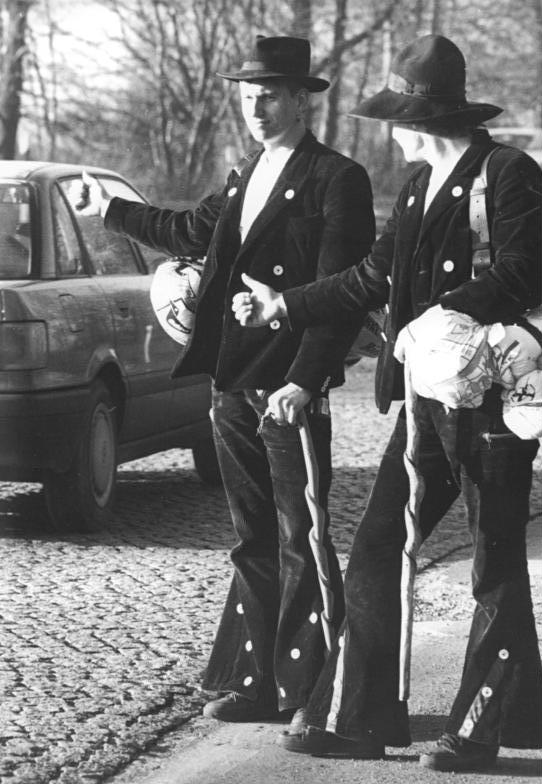
Aside from the obvious pride the carpenters could take from a job well done, non-technical activities reinforced social bonds. Social distinction was expressed in fine art and pictures, clothing, social events, and religious pageants. The different French compagnons were identified by their walking sticks, hats with coloured ribbons, and earrings decorated with framing squares and dividers. Public ceremonies and parades promoted ideas of Christian brotherhood and were a proclamation of skill. In medieval Europe there was a close association between craft guilds and religion. Prayers and masses were performed to invoke good fortune on the carpenter and his family and to gain power from God by combining spiritual observance with practical skills. All knowledge, both physical and metaphysical, is powerful. In fact, the word kraft, in German, means ‘strength’. In his craft, the carpenter has a sense of pride and a sense of belonging to an ancient tradition with a mysterious lore.
 Mysteries of the Carpenter